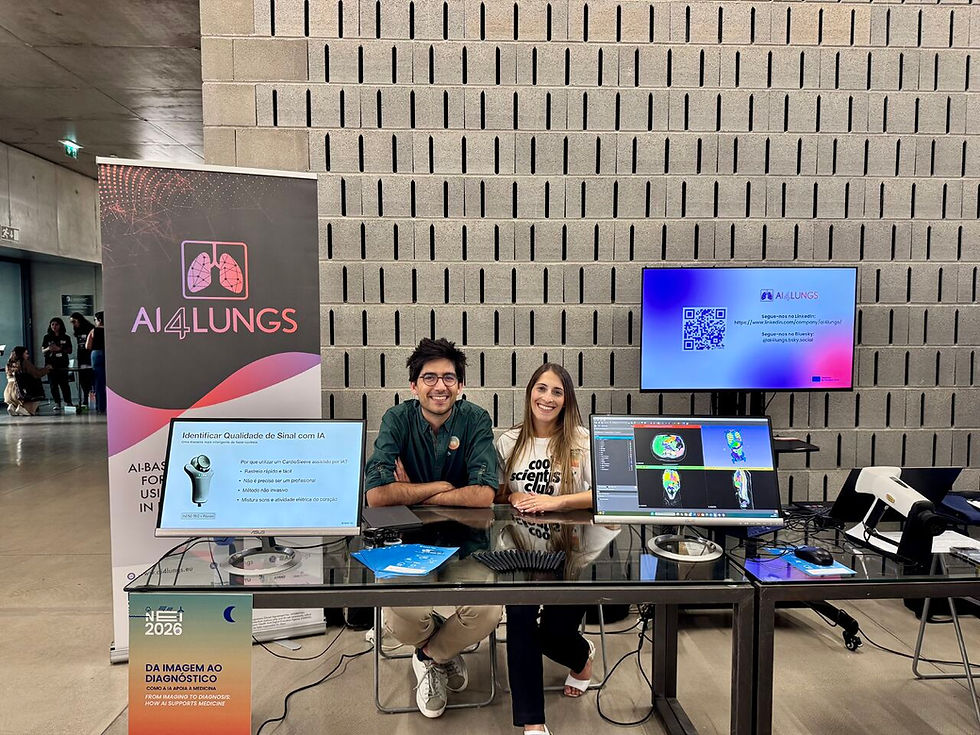
AI4LUNGS Explores Robust AI for Respiratory Sound Analysis at BSN 2026 (Plus photo gallery)
How can we move AI-powered respiratory sound analysis from controlled research environments to real-world clinical applications?
This was the central question explored during “From Signals to Systems: Hands-On Robust AI for Respiratory Sound Analysis”, a workshop held as part of IEEE EMBS on Body Sensor Network (BSN) 2026, bringing together researchers and practitioners to explore the opportunities and challenges of AI-driven respiratory healthcare.
Aligned with the conference's “From Lab to Life” theme, the workshop focused on developing AI solutions that are not only accurate but also robust, explainable and adaptable to real clinical conditions.
Turning Research Challenges into Practical Experience
Respiratory sound analysis offers promising opportunities for AI-supported health monitoring. However, real-world recordings present challenges, including background noise, interference from heart sounds, variability between recording devices and differences across patient populations.
Led by Francesco Renna, Alireza Babei and Pedro Oliveira from INESC TEC, the workshop combined technical insights with practical experimentation to explore how these challenges can be addressed.
Participants were introduced to the clinical and technical foundations of lung sound analysis before taking part in guided exercises using the publicly available ICBHI 2017 respiratory sound dataset. Through these exercises, they explored the development of an AI pipeline, from raw signal inspection and preprocessing to segmentation, signal representation and classification of abnormal respiratory sounds.
The workshop focused on an important message: the future of AI in respiratory healthcare depends not only on developing powerful algorithms, but also on ensuring they are reliable, interpretable and applicable in real clinical environments.
Through knowledge exchange, practical experimentation and collaborative discussion, the workshop contributed to bridging the gap between AI research and its potential clinical applications, a key ambition of the AI4LUNGS project.
Stay updated on the AI4LUNGS research development and progress by following the project on X, Bluesky and LinkedIn, and subscribing to our newsletter for the latest insights and advancements.